
A delayed task at the gate can put the entire flight schedule under pressure. Why does this happen—and how can you intervene in time? Process intelligence brings together data from separate systems and reveals dependencies during ongoing operations. The whitepaper “Process Intelligence in Aviation: From Insight to Action” by Lufthansa Industry Solutions (LHIND) uses examples from aviation to show how process knowledge translates into concrete action and what context AI needs to support informed decisions.
Connecting processes and improving operational decision-making
Whitepaper: Process Intelligence in Aviation—From Insight to Action
Weigh Your Options Early When Delays Occur
A delay in ground handling rarely affects just one flight. It can affect connecting flights, crew planning, and customer service. Looking at individual performance indicators in isolation does not reveal the full picture. Process intelligence connects event data from operational systems and shows how processes actually work together.
This makes it possible to assess the consequences of flight disruptions across process boundaries. It provides a foundation for weighing possible actions and their financial impact—instead of responding only after additional costs have already arisen.
AI Needs More Than Data
An AI model may detect a delay without knowing about available gates, crew and connecting flight dependencies, or permissible actions. Process intelligence provides this business context. It lays the foundation for AI to support more targeted decisions and trigger actions within defined limits.
In an interview, Prof. Dr. Wil van der Aalst of RWTH Aachen University explains why visibility must come before automation. The whitepaper also shows where human expertise remains essential: in cases that are unusual, safety-critical, or sensitive from a regulatory perspective. It outlines the guardrails companies need when deploying AI agents.

- What sets process intelligence apart from business intelligence and process mining
- How irregularity management, baggage handling, and aircraft component returns benefit from end-to-end process visibility
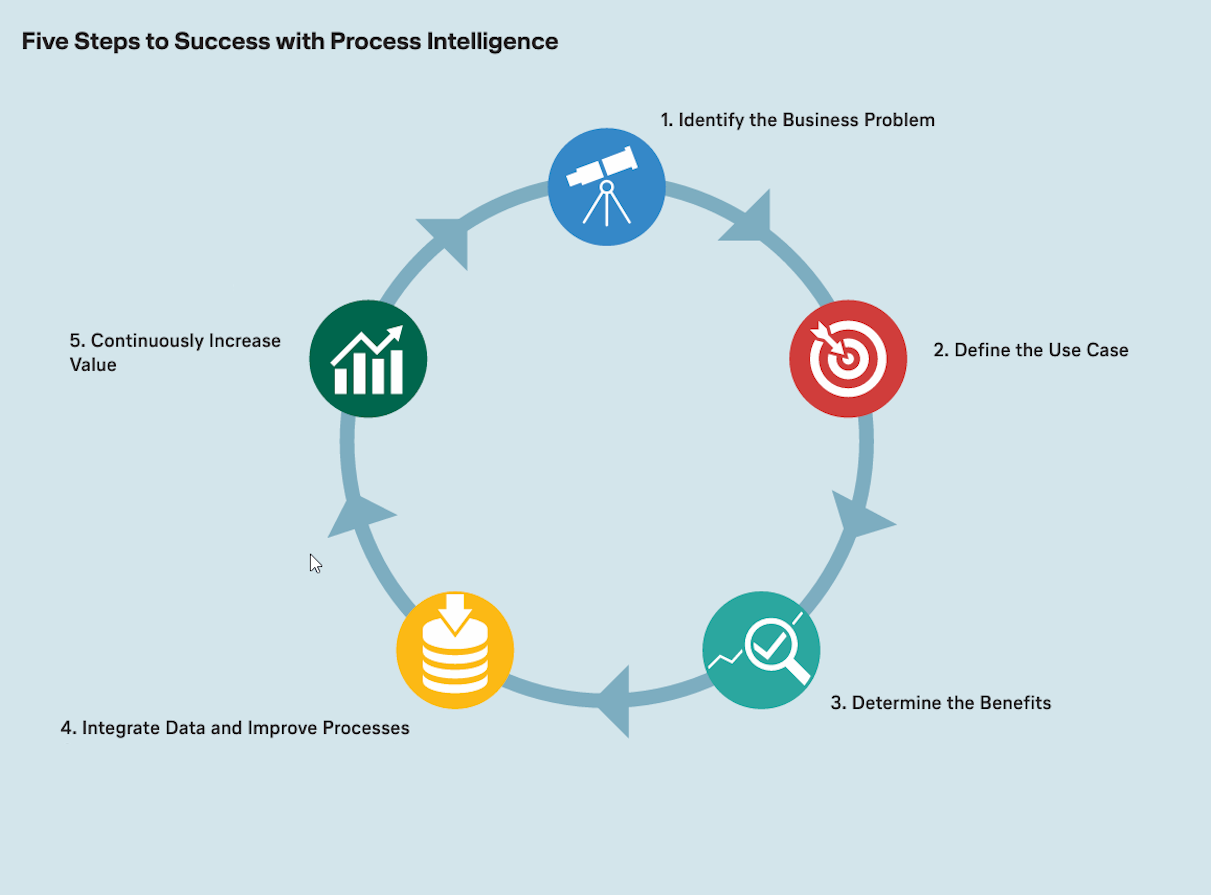
- Which five steps take you from a specific business problem to verified benefits
- How Lufthansa uses process intelligence to manage ongoing operations
- Why AI agents need process knowledge, business rules, and clearly defined limits on their actions
- How business departments and IT teams embed process intelligence in the organization and continuously develop it
- Business Value Comes from Decisions
Identifying a bottleneck does not, by itself, improve a process. Operational benefits arise only when insights translate into decisions and concrete action. - End-to-End Visibility Instead of Isolated Performance Indicators
Process intelligence connects data and dependencies across system boundaries. This makes it possible to assess the causes and consequences of disruptions in context. - Start with a Clear Focus, Automate Within Defined Limits
Start with a specific business problem and measurable benefits. Processes should first be understood and improved before AI acts within defined limits.