
Geopolitical conflicts, raw material shortages, volatile markets, and congested transport routes are increasing pressure on industrial supply chains. Under these conditions, traditional planning approaches are often no longer sufficient. Read our whitepaper to discover how proven aviation management principles can be applied to industrial supply chains. Learn how modern technologies help you spot risks early, make informed assessments of their impact, and make sound decisions even when conditions are uncertain.
Resilient Supply Chain Whitepaper
Lessons from Aviation: How to Build Resilient Supply Chains
Resilience Begins with a Shared Operational Picture
Suppliers, logistics providers, warehouses, and plants often use different systems and work with different versions of the same data. As a result, delays or quality risks often only become visible when costly workarounds are required. An end-to-end view of material flows, inventory, transportation, and condition data helps you spot emerging problems sooner and take action where it matters.
From Reactive to Proactive Supply Chain Management
In aviation, planning takes potential disruptions into account from the outset. The aviation industry brings operational data together to create a clear picture of current conditions, monitors risks continuously, and prepares alternative courses of action. This principle can be applied to industrial supply chains: Internet of Things (IoT) sensors provide near-real-time visibility into conditions, digital twins simulate potential impacts, and agentic AI helps evaluate courses of action faster. Predictive maintenance also helps detect equipment failures early and prevent disruptions.

- Why efficiency alone is no longer enough and resilience is becoming a strategic driver of competitiveness
- How a complete operational picture reveals risks, dependencies, and where action is needed
- Which operational management principles from aviation make industrial supply chains more resilient
- How sensors and asset tracking help identify quality risks early
- How digital twins, agentic AI, and predictive maintenance improve decisions and operations
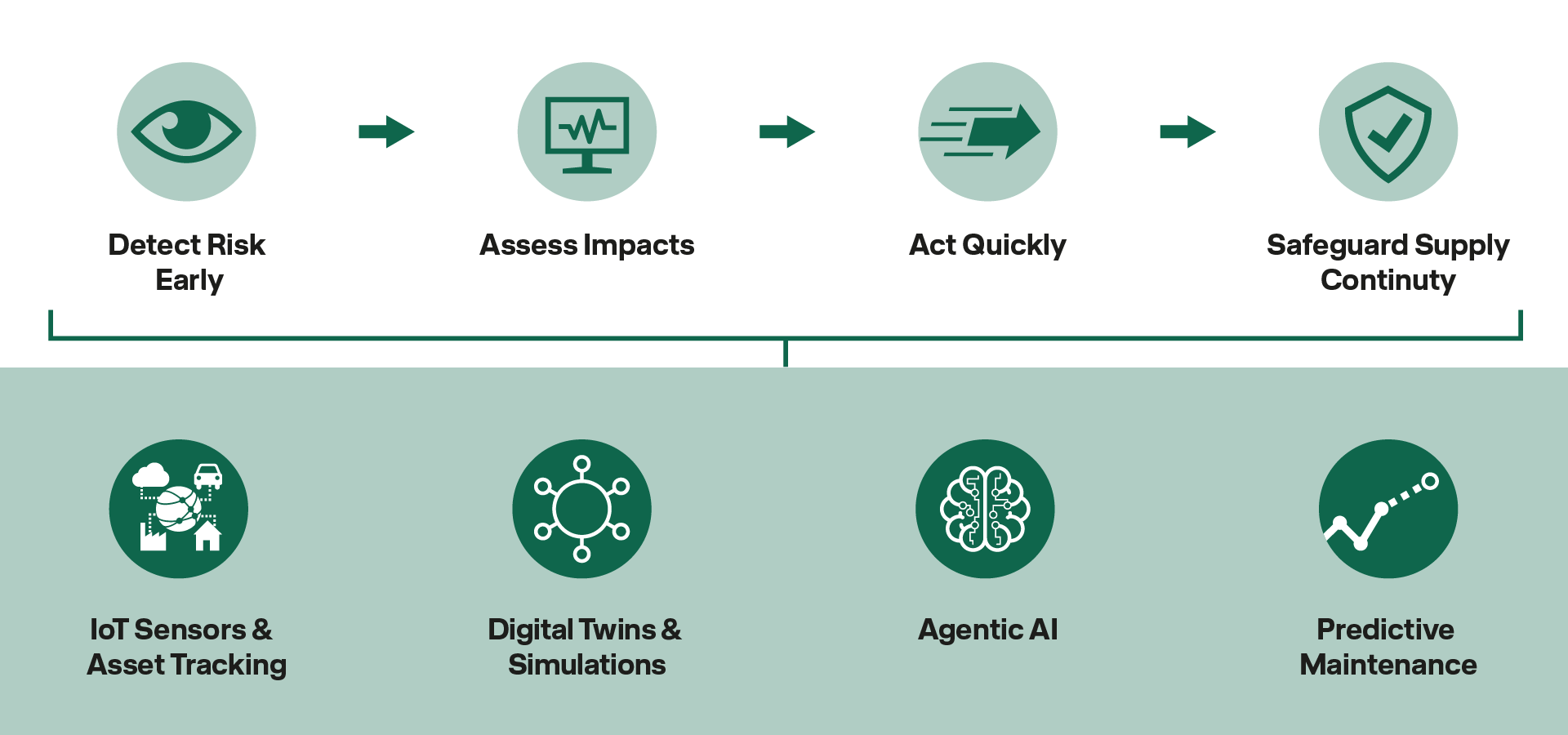
- Transparency Creates Room to Maneuver
End-to-end visibility integrates data across the supply chain. Exceptions are detected earlier, and corrective actions can be taken faster. - Simulation Builds Confidence in Decisions
Digital twins show how disruptions affect inventory, lead times, and costs. This gives you a solid basis for comparing your options. - Agentic AI Helps You Respond Faster
AI agents identify risks, assess alternative courses of action, and prepare appropriate responses. This enables companies to respond to change more quickly and stabilize operations.