
Real-time data and historical data can be used to gain valuable insights and create forecasts or simulations. The digital twin platform from Lufthansa Industry Solutions (LHIND) virtually represents real objects and processes as a complete ecosystem and tailors them perfectly to users’ different needs and fields of activity. This allows even non-data professionals to make informed, data-backed decisions at any time.
From Insights to Impact
Digital Twin Platform: Understanding Context, Making Better Decisions
LHIND Digital Twin: One Central Platform Instead of Fragmented Tools
Tools, apps, dashboards: In many companies, data is distributed across numerous systems. As a result, connections often remain hidden and decisions are sometimes made on the basis of incomplete information.
The LHIND Digital Twin pools your data in a central platform and places it in the relevant context. This produces a holistic overview of your processes and assets that provides all user groups with precisely the information they need to make informed decisions – in real time and perfectly tailored to their specific task.
Be it operational control or strategic planning, the digital twin software makes it possible to identify situations and trends early on, simulate scenarios, and make decisions on a consistent, data-driven basis.
- Data in the relevant context instead of isolated dashboards
- Faster and more informed decision-making
- Intuitive to use even for non-data experts
- Motivates and empowers users
- Can be individually tailored to users, companies, and industries
- Seamless integration into existing IT landscapes
- Innovation at high speed
- Stable, secure, scalable architecture
How Does the LHIND Digital Twin Work?
The LHIND Digital Twin puts the emphasis on role-based use and visualizes data in line with users’ mental models and work contexts. This makes complex relationships intuitively understandable even for users without extensive data expertise. Every user gets the insight that is most relevant to their tasks.
As a cloud-based Software as a Service (SaaS), the LHIND Digital Twin is not a replacement for existing systems, but rather serves as a higher-level integration layer. Existing applications are linked to one another and consolidated into a comprehensive overview. The LHIND Digital Twin does away with data silos, makes dependencies transparent, and makes complex relationships clear.
The result is faster, more informed decisions based on consistent and contextualized data. The platform is flexibly configurable and can be precisely tailored to existing business processes and industry-specific requirements, while also ensuring future-readiness and scalability.
Digital Twin Software: Use Cases Across Various Industries
We combine our expertise in digital twin technologies with in-depth industry knowledge in the fields of aviation, logistics, industry, retail, the maritime sector, and many other industries. The findings from numerous projects continuously flow into our software solution, making it a scalable ecosystem that proves its mettle in practice.
The digital twin platform from LHIND offers benefits for all companies with complex infrastructures – for example, companies that operate and manage plants, buildings, or fleets. It also helps to make relationships visible and understandable and aids with informed, data-backed decision-making in the case of complex operational processes as well.
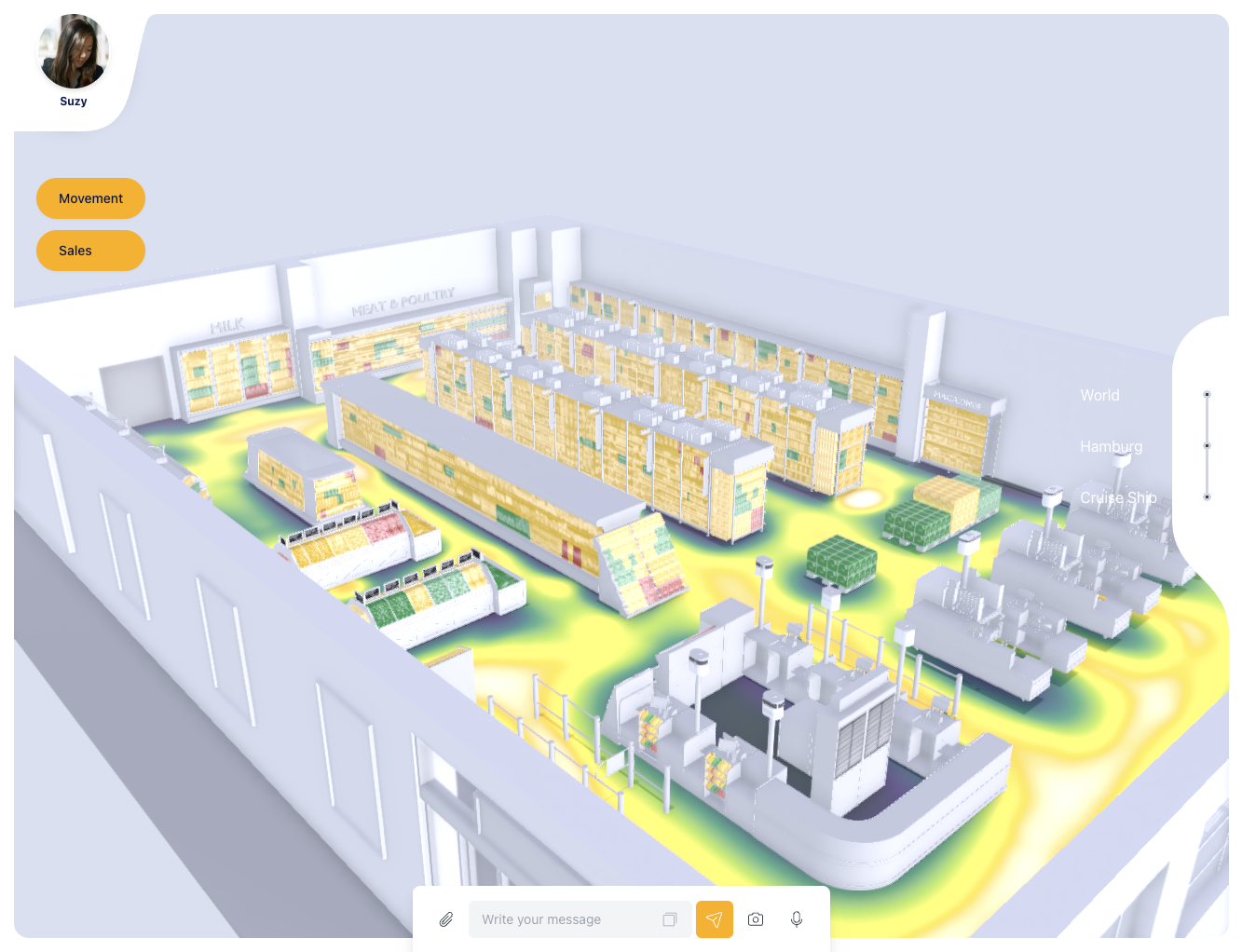
In retail, the digital twin platform makes it possible to map key operating processes in real time – from warehouse and inventory management to merchandise placement and space utilization.
At the same time, the digital twin serves as a strategic planning tool by realistically simulating scenarios such as product range changes, new product placements, or space reconfigurations.
This allows for strategic and operational decisions for increasing customer satisfaction and managing branches successfully in the long term.
Click here for more information on the digital twin for retail
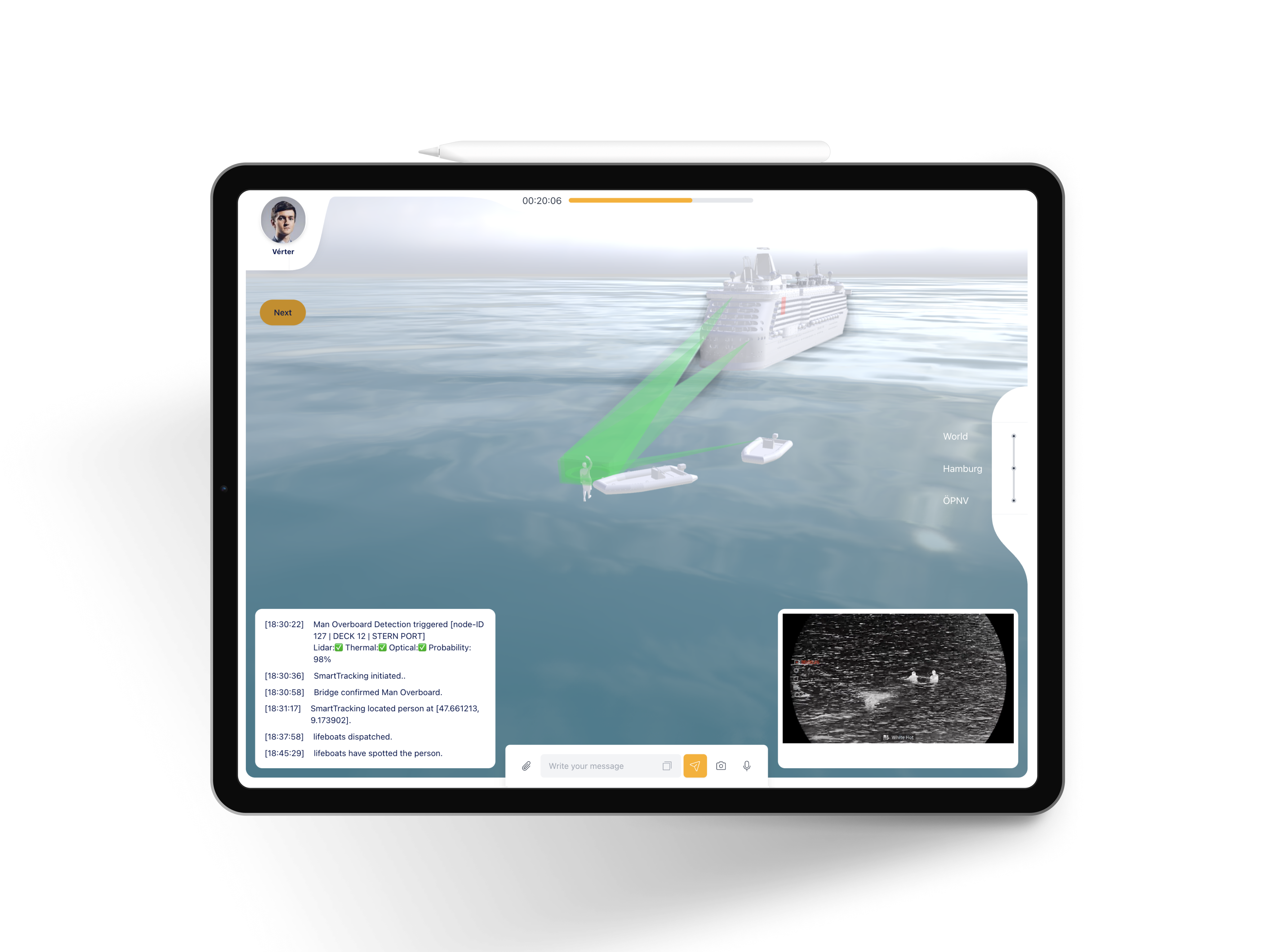
On cruise ships, the LHIND Digital Twin brings clarity in safety-critical situations and allows for swift action:
In a “man-overboard” situation, the digital twin software not only recognizes that a person has fallen overboard, but also where. Using sensor data, camera images, and environmental data (for example ship velocity, drift, or weather conditions), the digital twin pools all information into an easily understandable overview.
Taking into account all relevant data, the software can quickly and accurately locate the person in the water, thus helping the rescue team to make the right decisions right from the start and to optimally coordinate their rescue measures.
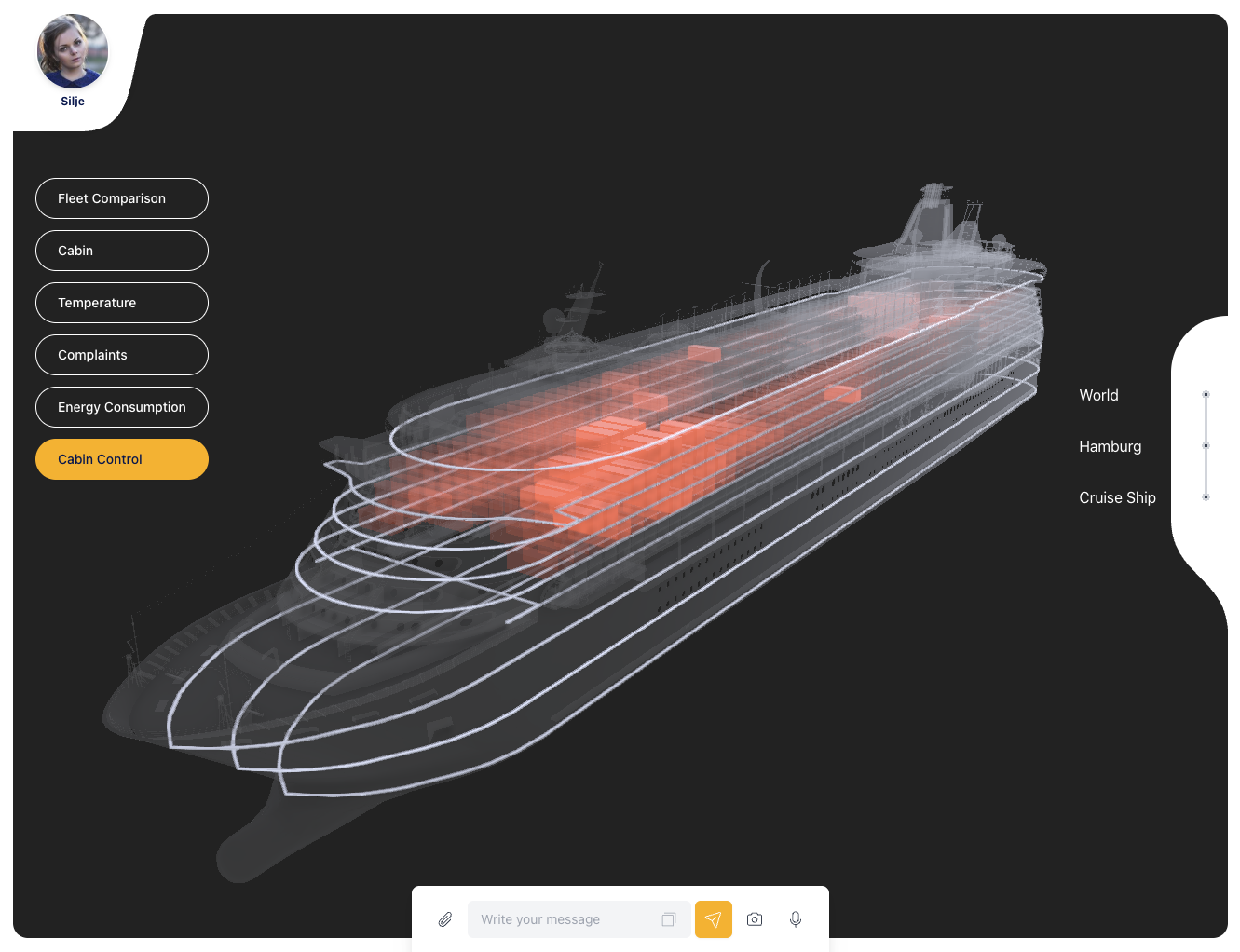
When it comes to global container shipping, the digital twin visualizes ship movements in real time and uses heat maps to show, for example, which routes are particularly profitable or result in the highest fuel consumption.
On individual ships, the X-ray tool provides a view through all decks and can accurately pinpoint anomalies in parameters such as fuel consumption or temperature. For individual reefer containers, this tool makes detailed temperature graphs and status data understandable.
At the same time, the digital twin provides insights into the terminal processes – from punctuality and loading status to operational bottlenecks – and thus provides a full picture of the entire transport chain.
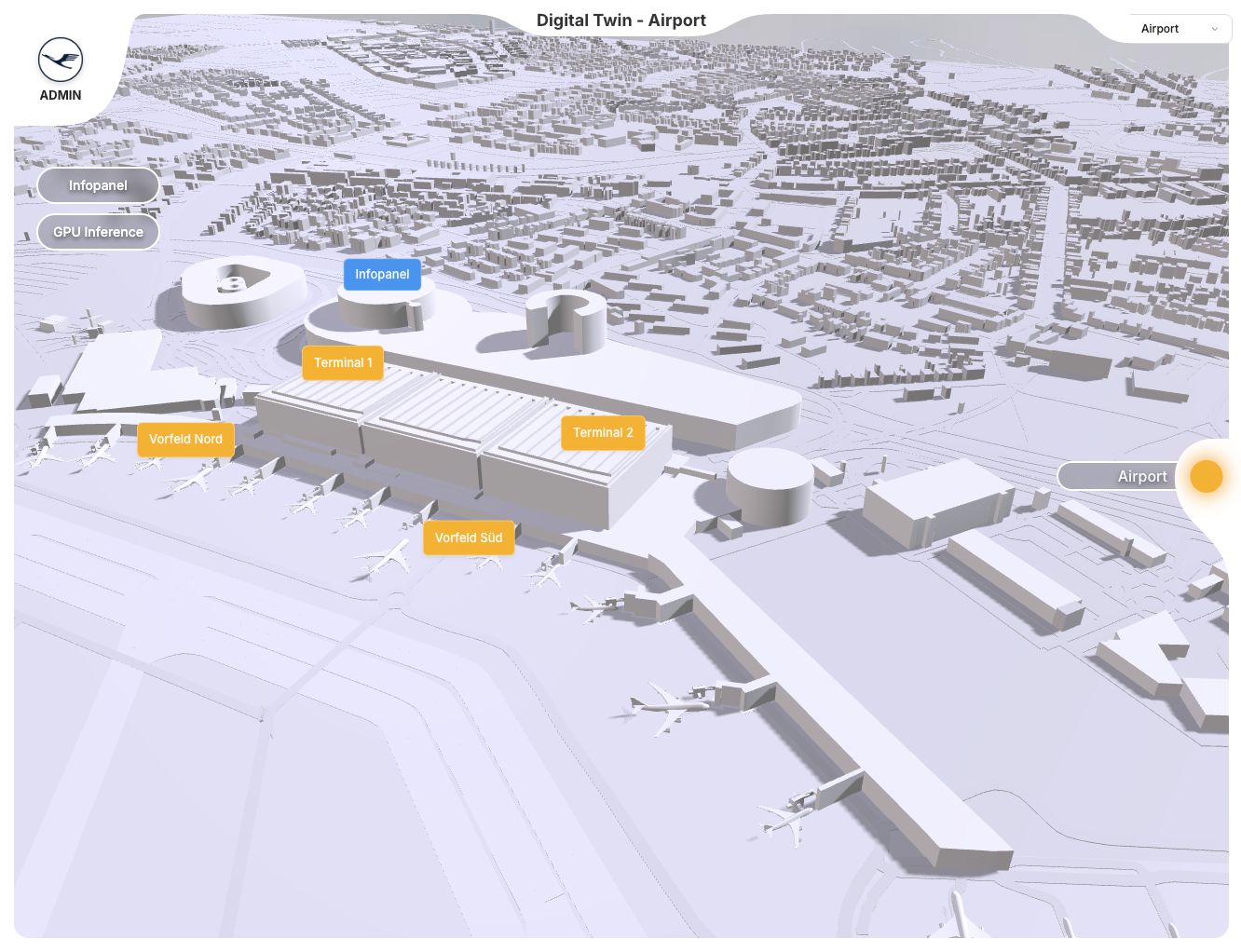
The digital twin platform can simulate complex airport environments fully and show in real time how passengers are moving around and distributed or where particular equipment is located.
This makes passenger flows, service operations, and equipment tracking visible and comprehensible. Technical parameters such as WiFi availability or sensor data can also be intuitively visualized and analyzed.
Automatic warnings are particularly valuable, for example when wait times at the security checkpoint exceed critical thresholds or when important equipment such as passenger boarding bridges are not where they should be. This produces a comprehensive overview that can be used to optimize operational processes.
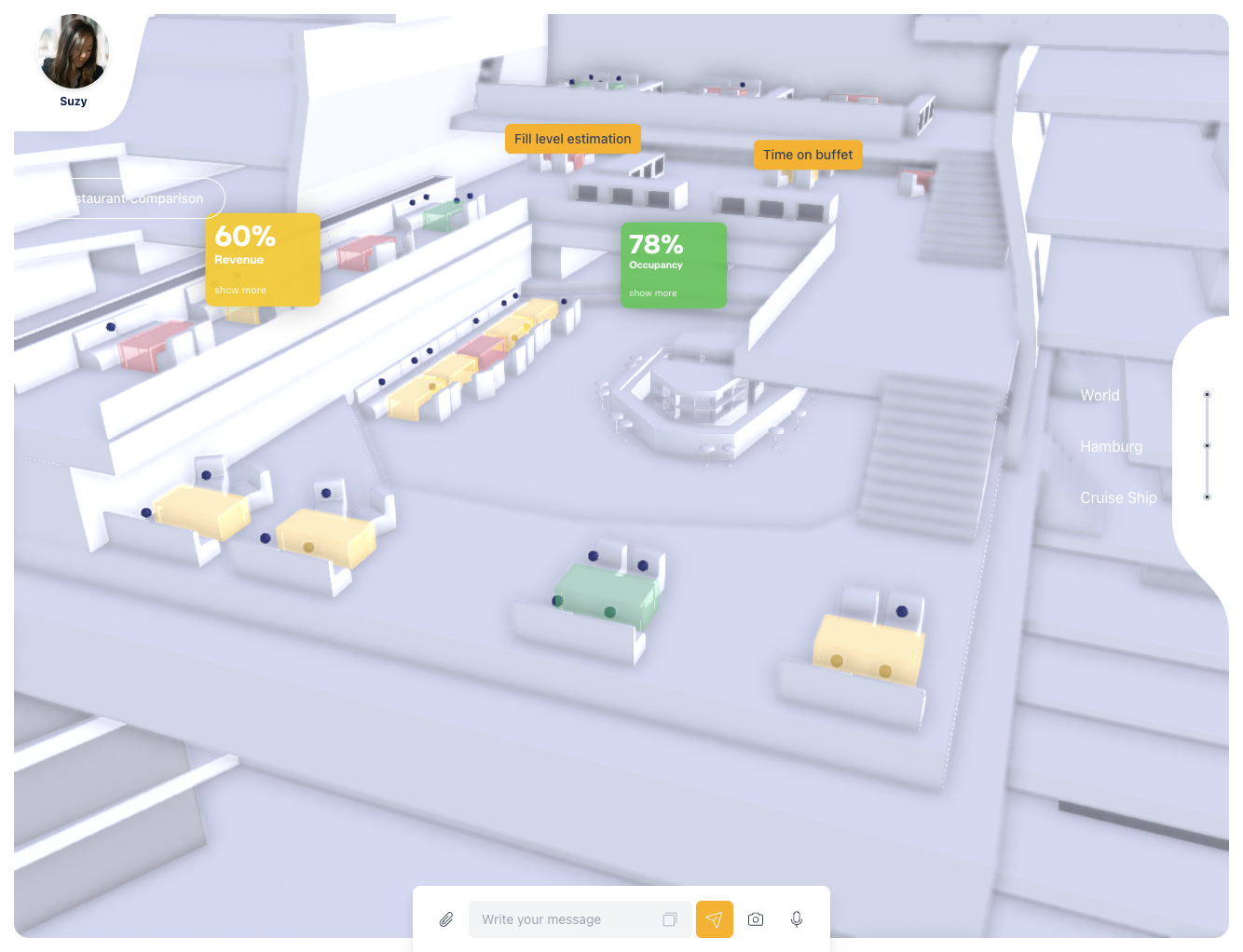
At restaurants, hotels, or event locations, the digital twin analyzes occupancy, demand, and guest movement patterns in real time. This makes it possible to optimally manage table seating, wait times, and service operations, while AI-assisted forecasting reduces food waste and increases the profits per table.
In high-traffic areas – such as buffets, foyers, or spa areas – the digital twin optimizes the flow of guests and prevents bottlenecks. At the same time, it coordinates catering and technical services, so that processes can flow seamlessly into one another and the overall experience is noticeably improved for guests.
Lufthansa Industry Solutions: Your Provider for Digital Twin Consulting and Implementation
We will assist you from the initial idea through to productive operation. The process for implementing your digital twin is structured into five phases:
- Defining challenges and relevant operational processes
- Documenting assets, data sources, system landscapes, and stakeholder needs
- Determining the realistic scope and value potential of a digital twin
- Developing potential use cases through structured exercises and moderated discussions
- Evaluating the use cases with regard to impact, feasibility, and data maturity
Result: A prioritized and validated use case matrix that lays the groundwork for design, architecture, and implementation planning
- Examining existing use cases from the relevant industry as well as inspiring examples from other fields together
- Translating problems, challenges, and goals into concrete KPIs
- Defining fundamental building blocks of the digital twin platform
- Incorporating innovation from various industries
Result: An interactive prototype that gives you a preliminary, tangible version of a digital twin
- Defining research questions, user needs, data availability, feasibility
- Compiling a project team at the customer’s premises
- Checking data availability
(If data that is not yet available is required – for example forecasts, simulations, or recommendations – our specialists will provide this as LHIND components.) - Integrating one or more of your systems
- Involving real user groups
Result: A fully functional system, including onboarding and support with customer success
- Comparing the PoC system against the original goals
- Recommending how the digital twin should be transformed into a productive system
- Translating requirements into a roll-out plan and an onboarding strategy for all users involved
Result: Productive use of the digital twin platform
- Evolving from a successful individual scenario to a company-wide ecosystem
- Rolling out further use cases
- Integrating additional locations, processes, data sources, departments or business areas
- Incorporating new data sources
Result: Sustainable further development of the digital twin and creation of a scalable, living ecosystem that fosters innovation, efficiency, and better decision-making across the entire company in the long run
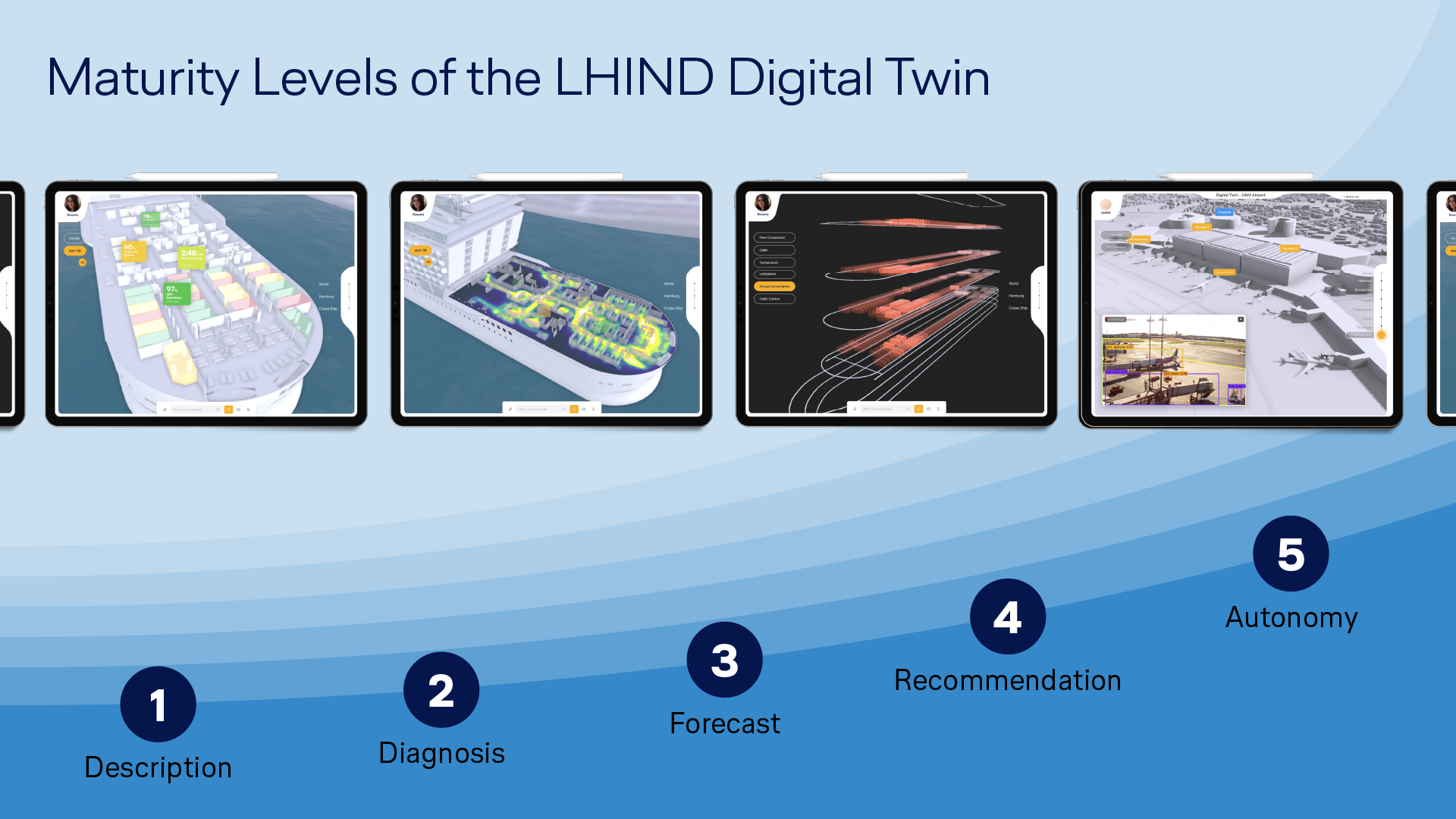
Maturity Levels of the Digital Twin: From Observation to Autonomous Action
Many digital twin initiatives fail because an all-encompassing, highly automated system is desired right from the start, resulting in a system that is too complex and difficult to manage. We therefore follow a modular approach and evolve your digital twin platform step-by-step through clearly defined maturity levels:
- Description
The digital twin points the user to relevant issues. For example: “Take a look at the highlights marked in red: Today’s turnover is lower than expected.” - Diagnosis
The digital twin explains the context. For example: “This is because there weren’t enough reservations – far fewer than during the last cruise.” - Forecast
The digital twin predicts the consequences. For example: “The demand for the next ten days is predicted to be as follows: ...” - Recommendation
The digital twin suggests a course of action. For example: “To achieve your goals, I recommend launching a digital signage campaign aimed at persona groups 2 and 5 and sending an in-app push notification to persona groups 3 and 8. What would you like to do?” - Autonomy
The digital twin determines a state, takes what it considers to be the most appropriate course of action independently within the specified parameters, and informs the user. For example: “Marketing campaigns A and E have been launched. Employee schedules have been amended accordingly.”
Would you like to discuss your use cases for a digital twin platform?
Our experts are ready and waiting to advise you. Get in touch with us – we look forward to receiving your inquiry.