
Artificial intelligence has long been a reality in many companies. However, its success is not determined by individual use cases, but by the quality of the underlying data platforms. The study “AI-ready Data Platforms 2026” by COMPUTERWOCHE Research Services, in collaboration with Lufthansa Industry Solutions, examines which requirements companies in the DACH region meet already—and where significant gaps still exist.
Data as the Foundation – AI as the Catalyst
Study “AI-Ready Data Platforms 2026”: How Well Are Companies Really Prepared for AI?
These Challenges Shape the Path to an AI-Ready Data Platform
Companies have high expectations for AI: Improving efficiency, reducing costs, and providing better access to data for their various business areas are at the top of the agenda. But the path to that goal is challenging. Poor data quality, fragmented data landscapes, and sluggish IT processes are among the biggest obstacles to becoming an AI-ready organization.
The study reveals a significant perception gap: While 84 percent of C-level executives and 75 percent of IT managers consider their data platforms to be AI-ready, only just over half of those in business areas share this view.
Cloud, Hybrid or Traditional? This Is the Reality of Data Platforms
The study shows: The technological landscape in companies is predominantly hybrid. More than 60 percent of respondents rely on a strategy that combines cloud and on-premises systems. Only 23 percent follow an entirely "cloud-first" strategy.
In terms of data architecture, the traditional data warehouse dominates with 62 percent, well ahead of more modern concepts such as the data lake (37 percent), data lakehouse (34 percent), data mesh (27 percent), and data fabric (25 percent).

- How widespread AI-ready data platforms really are today
- What goals companies pursue with AI-ready data platforms
- Where the biggest hurdles lie
- What the key requirements for platforms are
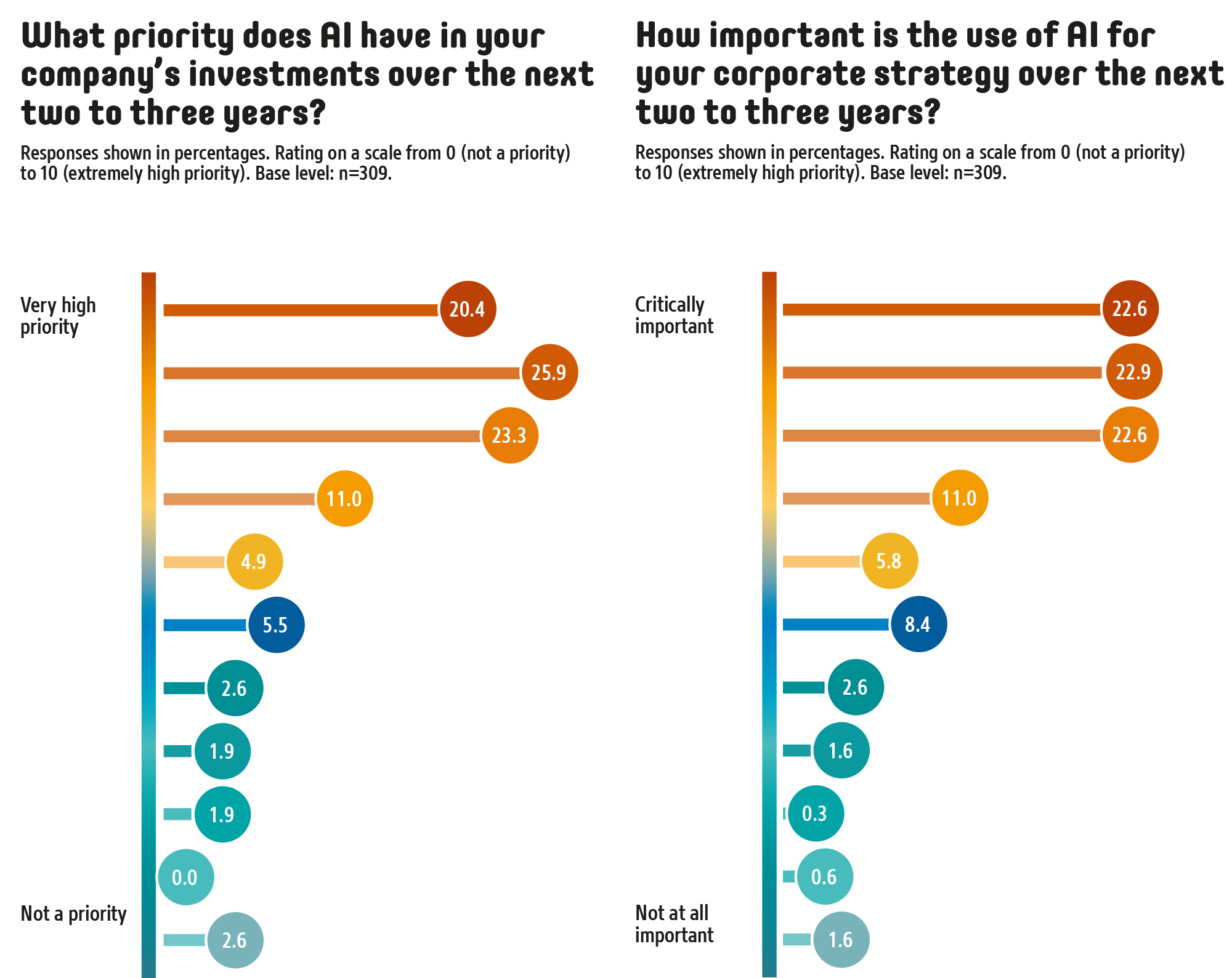
- What investment priorities companies set for AI and data
- Most data platforms are considered AI-ready—but not all of them
Nearly three-quarters of the companies surveyed report that they are already using AI-ready data platforms. However, there is a clear discrepancy between strategic assessments and operational realities in the business areas. - Data quality remains the biggest obstacle
The biggest obstacle to AI-ready data platforms is poor data quality (30 percent), followed by fragmented data landscapes (28 percent) and slow IT processes (25 percent). - Efficiency over revenue
When it comes to AI-ready data platforms, companies are primarily focused on improving efficiency (55 percent), reducing costs (49 percent), and providing better data access for business areas (48 percent). At 23 percent, revenue growth plays a secondary role—though business areas are calling for it much more strongly. - Governance is becoming increasingly important
While traditional data governance is in place at three out of four companies, there is still room for improvement when it comes to AI governance and AI ethics—including with regard to regulatory requirements such as the European Union Artificial Intelligence Act.