LHIND Trend Radar H1/2026

Artificial Intelligence is Now Ready for Production

The expectations are clear: By 2026, artificial intelligence (AI)—particularly generative AI—must deliver on its economic potential. According to the latest AI & Data Analytics Trend Radar by Lufthansa Industry Solutions (LHIND), AI is now ready for productive use. The Trend Radar also highlights other production-ready technologies, technologies that require strategic preparation, and ways companies can gain competitive advantages through governance, optimization, and end-to-end integration.

Norderstedt, February 3, 2026 – Lufthansa Industry Solutions (LHIND) has published its AI & Data Analytics Trend Radar for the first half of 2026. The Trend Radar helps companies classify technological developments and leverage them strategically.

“2026 marks a turning point: AI is moving beyond the phase of isolated experiments and is becoming ready for production. At the same time, automation and governance are becoming decisive competitive factors,” explains An Dang, IT Consultant AI and Data Analytics at LHIND.

“Companies must also invest in agentic architectures, orchestrated ML pipelines, and compliance frameworks to ensure scalability, efficiency, and security.”

Friendly smiling young man with short black hair and brown eyes
An Dang,
IT Consultant AI and Data Analytics at LHIND

Top Trends: Areas of Action and Recommendations

The analysis shows that AI, data architectures, and optimization technologies will dominate corporate IT agendas in 2026. Key developments focus on scaling AI, the productive integration of responsible AI, and advanced optimization strategies.

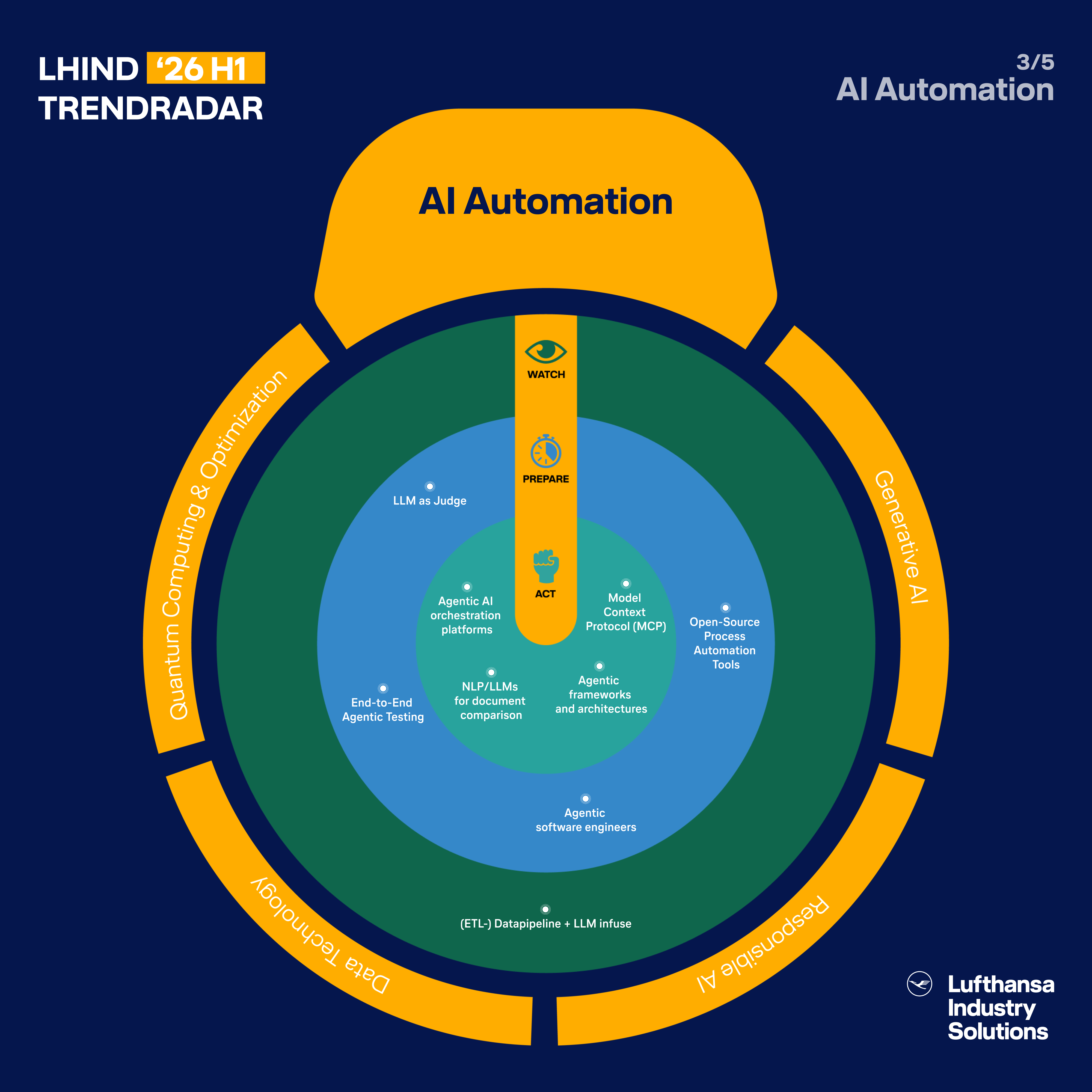
End-to-end agentic architectures are becoming increasingly important. AI systems are progressively able to plan, control, and monitor processes autonomously. Production-relevant topics such as agentic frameworks, orchestration platforms, and the Model Context Protocol (MCP) are emerging, along with governance approaches such as “LLM as Judge” and agentic testing. The focus is shifting away from isolated use cases toward the deep integration of LLMs into existing data and IT landscapes.

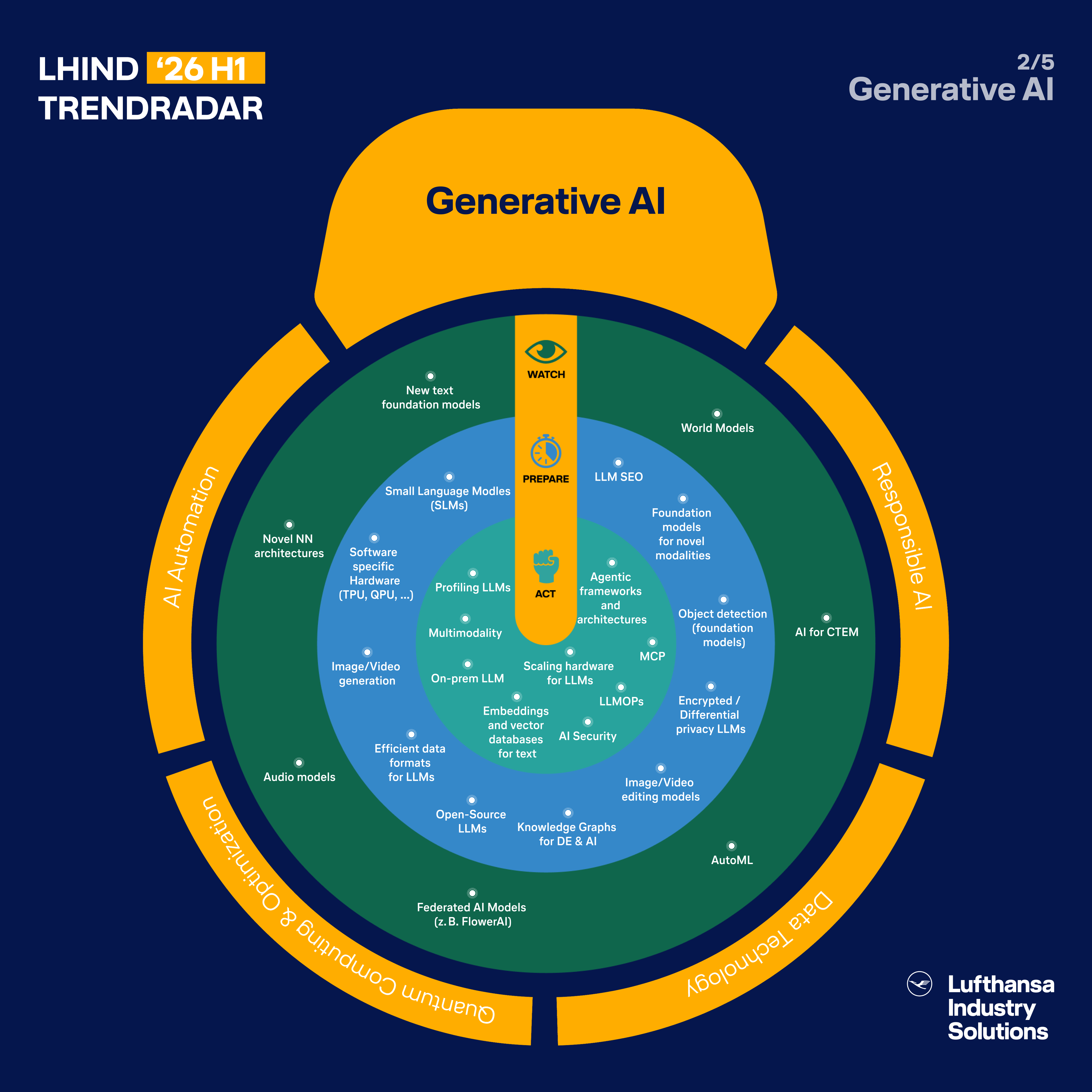
Generative AI is evolving from a trending topic into a core platform technology. Agentic frameworks, LLMOps, vector databases, and multimodal models are already delivering measurable business value. At the same time, small language models (SLMs), on-premises deployments, and AI security solutions are gaining relevance for cost control, governance, and regulatory compliance. Overall, the trend is clearly moving toward holistic, end-to-end architectures rather than standalone models.

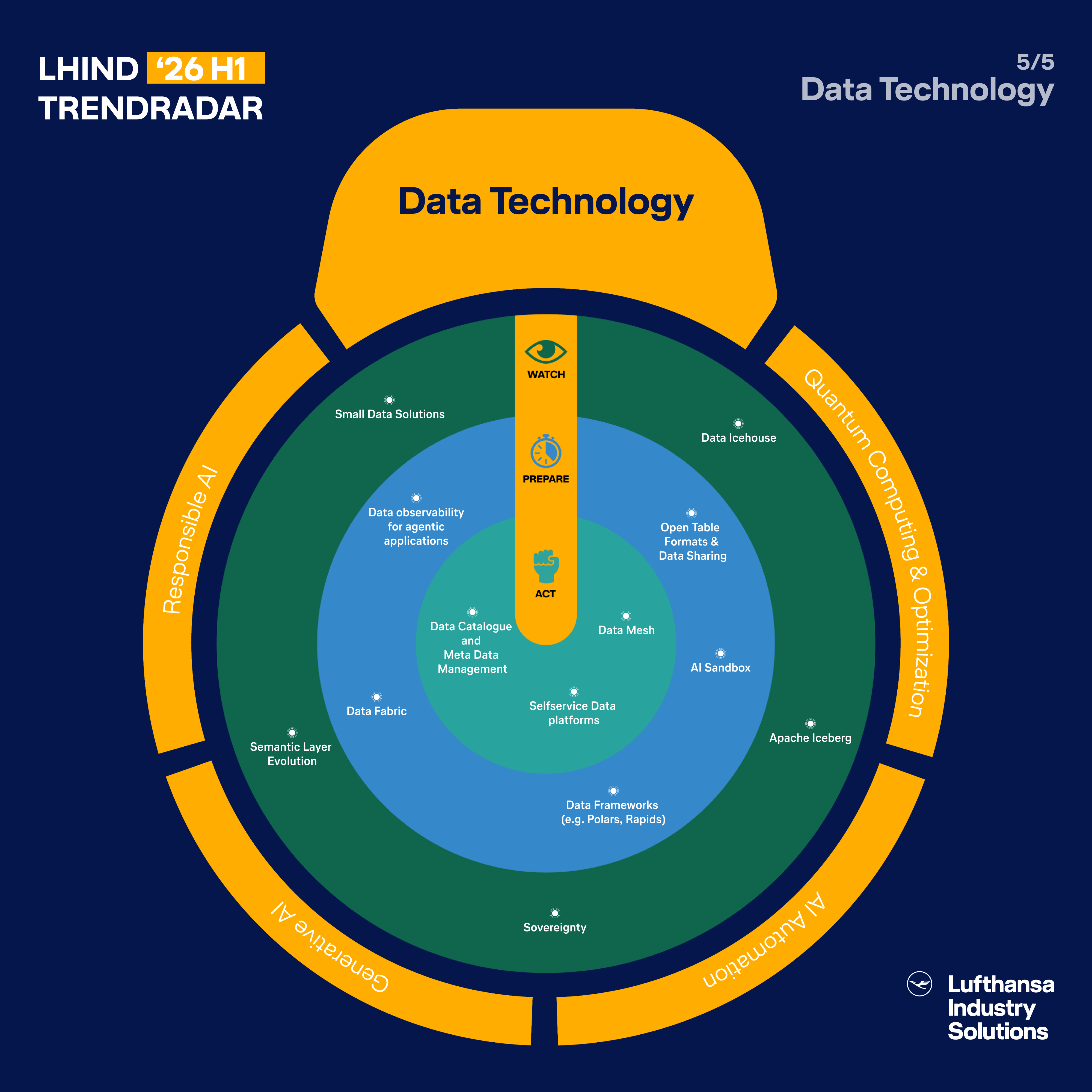
Data mesh, self-service data platforms, data catalogs, and metadata management are key focus areas. Open table formats, data observability, and robust data frameworks enhance data quality, governance, and AI readiness. The emphasis is on holistic data ecosystems that deliver sustainable business value.

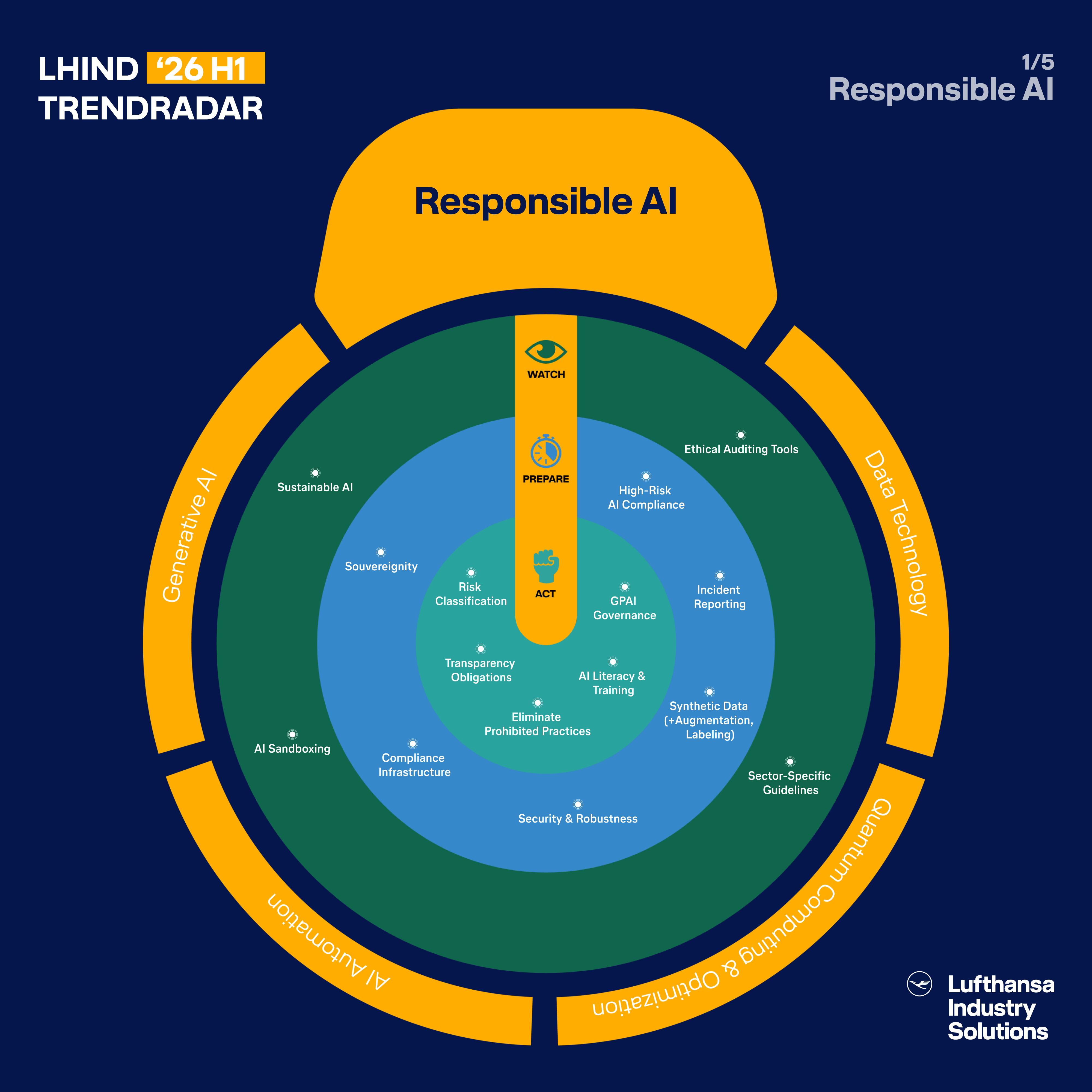
Responsible AI is evolving from high-level ethical guidelines into concrete, actionable requirements, shaped by the EU AI Act and similar initiatives. The focus is on governance, compliance, risk classification, AI literacy, and the secure operation of AI systems. Companies must increase investments in security, reporting, and scalable infrastructures. Emerging approaches such as sustainable AI, AI sandboxing, and ethical auditing demonstrate that responsible AI is becoming a professional management discipline in which compliance, infrastructure quality, and long-term sustainability directly determine competitiveness.

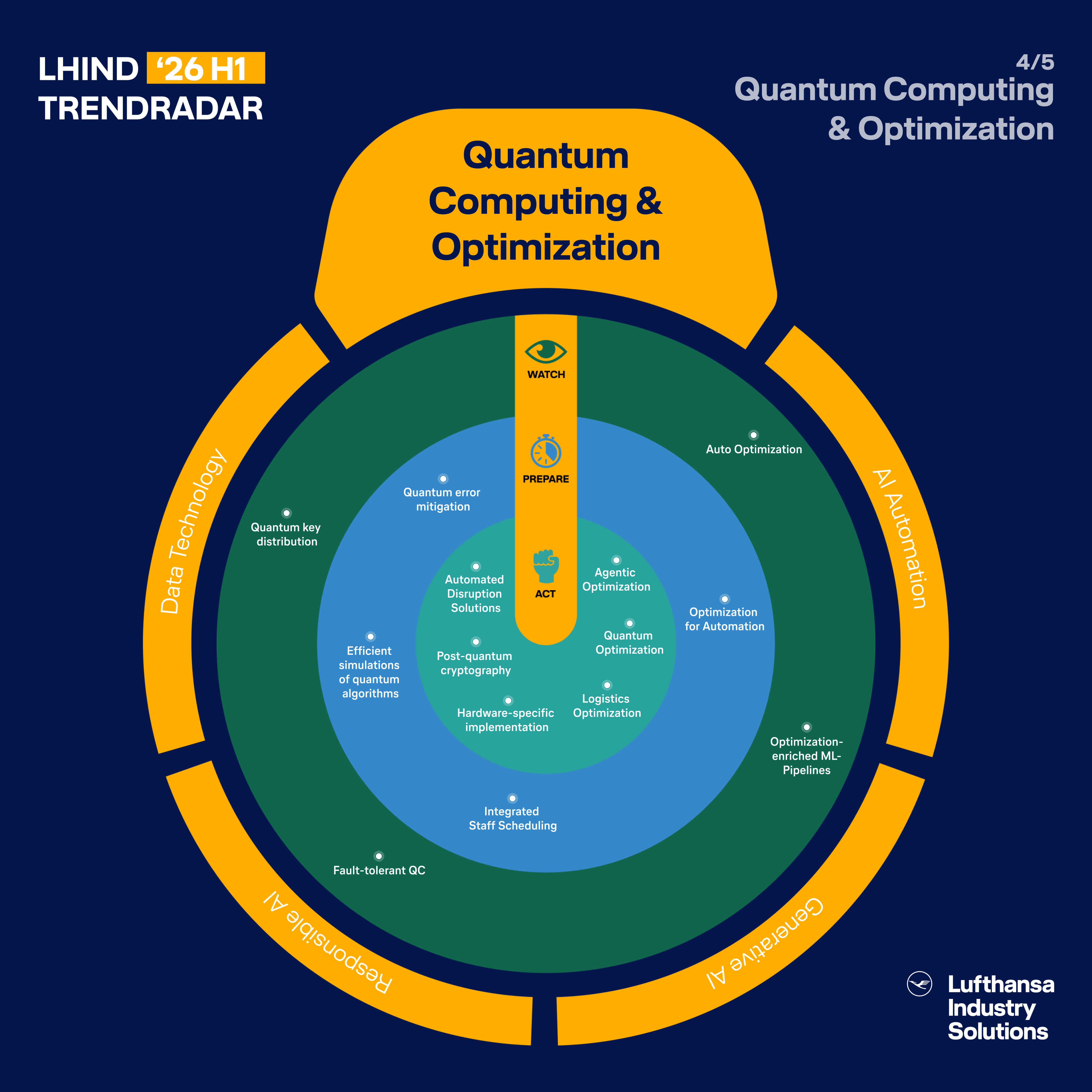
Quantum computing remains at an early stage of maturity. The transition from NISQ to fault-tolerant quantum computing continues to be monitored. The current focus is on evaluating quantum optimization and its potential applications to identify realistic time frames and suitable use cases that offer genuine quantum advantage. Meanwhile, classical optimization is receiving renewed attention: following significant investments in data platforms and analytics, organizations are now well positioned to leverage these foundations to improve efficiency and automation—both in AI-driven scenarios and in the sustainable optimization of existing processes.

“Technology alone is not enough. Governance, guidelines, and new skills are decisive for the sustainable success of AI and data-driven systems.”

Friendly smiling young man with short dark hair and black shirt
Bartek Jezierski,
IT Consultant AI and Data Analytics at LHIND

The AI & Data Analytics Trend Radar is published every six months. The H2/2026 Trend Radar is scheduled for publication in summer 2026.

About Lufthansa Industry Solutions

Lufthansa Industry Solutions is a service provider for IT consulting and system integration. This Lufthansa subsidiary helps its clients with the digital transformation of their companies. Its customer base includes companies both within and outside the Lufthansa Group, as well as more than 300 companies in various lines of business. The company is based in Norderstedt and employs more than 3,000 members of staff at several branch offices in Germany, Albania, Switzerland and the USA.